

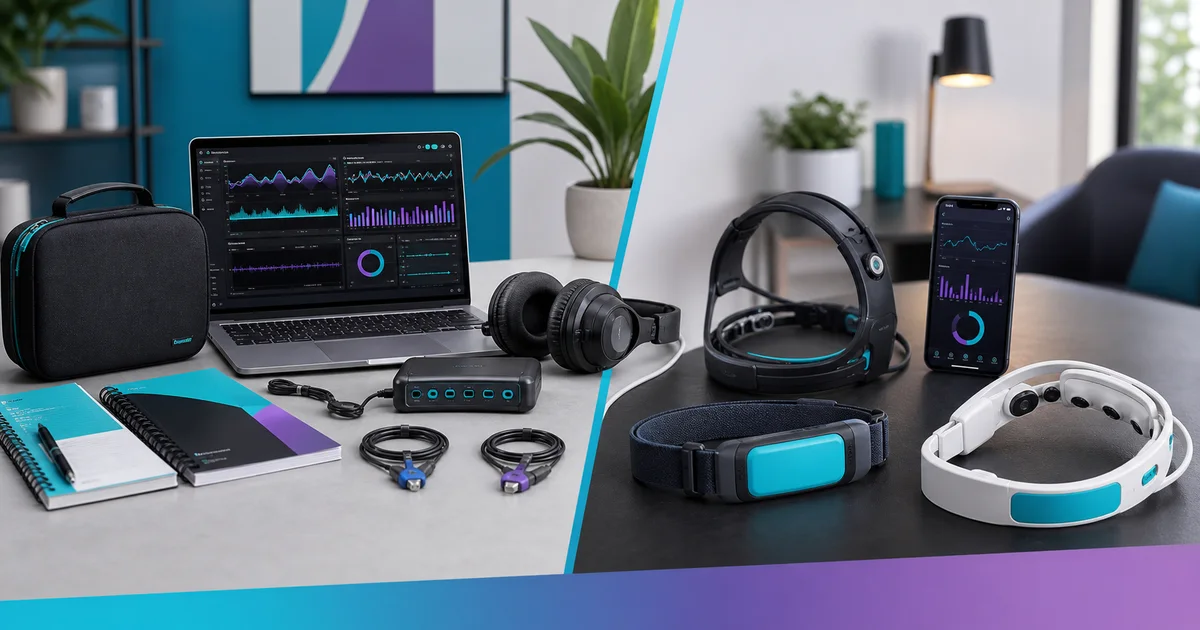
Short answer: a wearable device is not simply a smaller version of every full neurofeedback system. The products can differ in what they measure, where their sensors sit, how feedback is delivered, what software or membership is required, and how much setup the buyer manages.
That distinction matters because the phrase wearable neurofeedback device is used for products with very different hardware and service models. Before comparing brands or prices, confirm the signal, sensors, feedback, access terms, and support behind each option.
This guide compares observable product and service details for general-wellness decision-making. It does not rank medical effectiveness or recommend a product for a health condition. Product details can change; the source check for this article was completed July 31, 2026.
Disclosure: Freedom Neurofeedback Services offers local NeurOptimal rental options. Consumers who want to purchase a NeurOptimal system must visit the NeurOptimal website directly. The other products named here are included so readers can compare published features; this guide does not rank or endorse a “best” product.
Separate the measurement, feedback, and product model
A product’s shape tells you very little about how it works. Three questions make the comparison clearer:
- What is measured? EEG measures electrical activity at the scalp. fNIRS measures changes in blood flow and oxygenation. Some products do not describe a measured brain signal in their published specifications.
- What is delivered? The user may receive audio, visual, haptic, light, or sound-based cues.
- Does the delivery respond to the measurement? Feedback means the output changes in response to a measured signal. A fixed light-and-sound program is a different product model.
Current vendor materials illustrate why buyers should verify all three:
- Myndlift is a software-and-service platform rather than the wearable itself. It says its program works with Muse S Athena, Muse S, and Muse 2 headbands, with an optional external electrode for additional scalp locations. The app provides audio, visual, and haptic feedback.
- Mendi is a headband that uses fNIRS rather than EEG. It measures a brain signal at the forehead—a different signal from EEG, not the absence of a measurement.
- BrainTap describes its headset in terms of eye-and-ear LEDs, audio, Bluetooth, and a wired audio option. Its membership and headset specifications page, reviewed July 31, 2026, does not list EEG measurement. That describes the page reviewed, not every product in the BrainTap line.
The practical question is therefore not only, “Is it wearable?” Ask, “What does it measure, where does it measure it, and what exactly changes in response to the measurement?”
For a broader introduction to the distinction between biofeedback and neurofeedback, see Freedom’s equipment, feedback, and provider questions guide.
Full system and wearable: a responsibility map
| Buying question | Configured system example | Wearable-and-app example |
|---|---|---|
| What hardware is involved? | A configured computer or tablet, amplifier, sensors, cables, audio equipment, and supplies may be packaged together. | A headband or headset commonly works with a phone or tablet app. Some programs add an external electrode or separate controller. |
| Where are the sensors? | Sensor placement can include the scalp and ears. NeurOptimal, for example, describes two scalp sensors and three ear sensors. | Placement is often built into the headband, although the number and location of sensors vary. An optional external electrode may add another scalp location. |
| How is feedback presented? | NeurOptimal describes brief interruptions in music heard through earbuds or headphones, with optional on-screen visualizations. | Programs may use games, video, streaming media, sound, visuals, or vibration. Myndlift describes audio, visual, and haptic feedback. |
| How is access sold? | A system may include a limited session license or an unlimited license, with support terms handled separately. | The device may require an app account, paid membership, or coaching service. A headset price alone may not represent the complete program cost. |
| Who manages the process? | Some configured systems are designed to run automatically after setup. Provider or vendor support may be available for equipment questions. | Some wearable programs include a coach or practitioner who reviews an assessment and creates a training plan; others are primarily self-directed apps. |
| What needs regular attention? | Sensor placement, conductive supplies, cables, software access, session licensing, and equipment storage. | Headband fit, charging, device compatibility, app access, memberships, user profiles, and any external electrode supplies. |
These are category patterns, not universal rules. A buyer should confirm every field with the current manufacturer or provider before assuming that a particular product follows the pattern.
A real configured-system example: NeurOptimal
NeurOptimal’s current Flex bundle page lists a fully configured system, a zAmp, one sensor set, earbuds, conductive paste, cables, and 100 sessions. Its Unlimited bundle lists a fully configured system, an unlimited session license, a zAmp, two sensor sets, earbuds, paste, and cables. The vendor describes both as complete system bundles rather than a stand-alone wearable.
For a standard home session, NeurOptimal says two sensors are placed on the scalp and three on the ears. Music plays through earbuds or headphones, and brief audio interruptions provide the feedback. This setup illustrates why a full system comparison should include the amplifier, computer, sensors, software license, audio, supplies, and support—not just the part worn on the head.
If this format is the one you are considering, consumers who want to purchase a NeurOptimal system must visit the NeurOptimal website directly for current bundle information.
A wearable-and-service example: Myndlift with Muse
Myndlift’s current practitioner page says the platform works with Muse S Athena, Muse S, and Muse 2 headbands. It also describes an optional electrode for additional scalp locations. Myndlift describes its consumer program as combining compatible hardware with an app, an initial assessment, a personalized plan, and an assigned Neuro Coach.
This is an important purchasing distinction: the wearable is one component of the offer. App access, coaching, membership terms, and compatible hardware all affect what the buyer receives and what continues after the initial purchase.
Different head-worn products measure different things
Mendi’s current technical specifications identify its signal as fNIRS—functional near-infrared spectroscopy—rather than EEG. It still describes feedback from a measured brain signal; the signal and hardware are simply different from an EEG system. BrainTap’s reviewed membership and headset page describes light and sound features but does not list EEG measurement. That observation is limited to the page reviewed on July 31, 2026.
Those products should not be placed in a single “EEG headset” column simply because they are worn on the head. A useful comparison preserves the technology difference instead of treating every brain-training wearable as interchangeable.
Compare the complete cost, not the first price shown
Sticker prices can be misleading when one number covers a complete configured system and another covers only a headset or starting kit. Build an all-in worksheet for the period you realistically expect to use the product.
| Cost field | What to verify |
|---|---|
| Initial hardware | Every component included, compatible phone/computer requirements, shipping, and tax. |
| Software access | Whether software is included, licensed by session count, or tied to a recurring membership. |
| Additional users | Household-sharing rules, separate profiles, coach access, and added account fees. |
| Consumables | Paste, sensors, electrodes, cables, cleaning items, and replacement intervals. |
| Support | Setup help, technical support, coaching, response channels, and the period included. |
| Data and accounts | What is stored, whether it can be exported or deleted, which accounts are required, and what access remains after cancellation. |
| Ownership limits | License transfer, resale, cancellation, data export, warranty, and return terms. |
Nine questions to ask before choosing
- What signal does the product measure? Ask for the exact technology, not only the phrase “brain training.”
- How many sensors are included, and where are they placed? Confirm whether an optional electrode or accessory is needed.
- What creates the feedback? Music interruptions, games, video, light, vibration, and on-screen scores are different experiences.
- What hardware must I already own? Check phone, tablet, computer, operating-system, Bluetooth, and internet requirements.
- What remains available if I stop paying a membership? Separate ownership of the hardware from continued app, coaching, or session access.
- Who helps with setup? Identify whether support comes from the manufacturer, a provider, a coach, or a self-service knowledge base.
- Can more than one person use it? Confirm user profiles, session limits, household terms, and data separation.
- What information is stored? Ask where account or session information is kept, whether it can be exported or deleted, and what happens after cancellation.
- What is the return, warranty, and transfer policy? Get the current terms before purchase rather than relying on an older review.
If portability is the priority, begin with required hardware, battery and connection requirements, and what still works without a membership. If several household members may use the equipment, begin with licenses, profiles, included sessions, supplies, and support terms. These filters narrow the field without pretending one format is universally better.
Where a rental can clarify the workflow
If your interest is specifically a NeurOptimal system, a rental can show you the equipment, sensor setup, and household routine before an ownership decision. Freedom currently lists local NeurOptimal rental options with in-person pickup and a training session. Review the current plan limits and pickup details directly on that page. If you decide to explore a rental, see the steps for starting a NeurOptimal rental.
For a broader introduction to using equipment outside an office, read Freedom’s guide to neurofeedback at home. It explains the home-use context, while this article stays focused on product categories and buying questions.
Frequently asked buying questions
Is every neurofeedback headset an EEG device?
No. Some head-worn products use EEG, while others use fNIRS, light and sound, or another signal and feedback method. Verify the current technical specifications instead of relying on the product’s shape or category label.
Is a full neurofeedback system automatically better than a wearable?
No universal conclusion follows from the form factor alone. The useful comparison is whether the system’s signal, feedback, setup, access model, support, and total cost fit the buyer’s intended use.
Can I compare the advertised purchase prices directly?
Only after confirming what each price includes. A configured bundle, a headband, and a starting kit plus membership represent different scopes. Compare the complete cost over the same period.
What is the most important question to ask first?
Ask what the product measures and how that measurement creates feedback. That answer makes the rest of the hardware, software, and service comparison much clearer.
Sources reviewed
Current specifications were checked on July 31, 2026. Recheck product pages and terms before making a purchase.
- NeurOptimal Flex License Bundle
- NeurOptimal Unlimited Bundle
- NeurOptimal first-session walkthrough
- Myndlift for individuals
- Myndlift hardware and platform information
- Mendi technical specifications
- BrainTap membership and headset specifications
Freedom Neurofeedback Services provides general educational information. This article is not medical advice and does not diagnose, treat, cure, or prevent a medical condition. Discuss health concerns and medical decisions with an appropriate licensed professional.
